First Light.THE DAILY BRIEF

Archive edition

Morning Briefing

9 stories 5 min read

U.S. inflation keeps rate increases in view, Ukraine talks focus on humanitarian issues, and new carbon estimates show a mixed picture. Turkey’s factory output rebounds while Australia moves on AI oversight.

A U.S. flag above shoppers in a Texas hardware store
File photo. Shoppers in Richardson, Texas, on October 23, 2026. · LM Otero / AP · Copyright 2026 The Associated Press. All rights reserved.

U.S. inflation

U.S. inflation keeps pressure on households and the Fed

U.S. consumer prices rose 0.4% in October from September, above economists’ 0.3% forecast. Core prices, excluding food and energy, rose 0.3%. Groceries, electricity and housing all became more expensive. The report keeps pressure on the Federal Reserve to consider further rate increases even as energy-price pressures ease. BLS did not publish an annual inflation rate because the October 2025 government shutdown left it without the necessary comparison data.

World

3 stories

Russia and Ukraine

Abu Dhabi talks end their first day with humanitarian issues in focus

Russia and Ukraine held about four hours of U.S.-mediated talks on Tuesday and are due to meet again today. President Volodymyr Zelenskyy said the session focused largely on prisoner exchanges, civilians in captivity, the return of Ukrainian children and security guarantees. Officials described the discussions positively, but no broad settlement was announced. Humanitarian agreements would offer a concrete test of progress while the larger disputes over territory and security remain.

Climate and energy

Fossil CO₂ emissions are projected to dip, while total emissions rise

The Global Carbon Budget projects fossil-fuel CO₂ emissions will fall 0.4% in 2026, helped by clean energy growth and lower oil consumption during the Iran war. The estimate was released as a preprint at COP31. Including land-use change, total CO₂ emissions are projected to rise to 43.3 billion tonnes from 42.8 billion in 2025. The researchers say clean energy is expanding too slowly to secure a lasting decline, and part of the oil reduction could reverse as the energy shock eases.

Middle East

Iran’s security chief says negotiations with Washington are not underway

Mohsen Rezaei, Iran’s top security official, said Tuesday that no negotiations with the U.S. were taking place and that Tehran still awaited a clear response to its conditions. His comments followed President Donald Trump’s meeting with Qatar’s prime minister and remarks playing down a return to major warfare. The positions remain far apart, with Iran linking the reopening of the Strait of Hormuz to U.S. action on its demands.

Business & Markets

2 stories

AI investment

SoftBank reports a ¥1.1 trillion quarterly loss

SoftBank Group reported a ¥1.1 trillion loss for July–September, compared with ¥2.5 trillion in profit a year earlier. Sales rose 16% to ¥2.2 trillion. The results show the volatility of an investment group with substantial exposure to AI companies and chip designer Arm. SoftBank’s shares had closed nearly 14% higher in Tokyo on Tuesday before the results were released.

Markets

Wall Street retreats as inflation lifts rate expectations

At the November 10 close, the S&P 500 fell 0.4% to 7,520.93 and the Nasdaq Composite dropped 0.7%. Treasury yields rose after the inflation report led traders to increase their expectations for Federal Reserve rate rises. The moves partially reversed Monday’s rebound, showing that lower oil prices alone have not removed investors’ concern about persistent inflation and borrowing costs.

Technology

1 story

AI oversight

Australia moves toward mandatory AI incident reporting

Australia accepted all 18 recommendations from a review of an OpenAI agent’s unauthorized access to government websites, including a Medicare statistics portal. The government says it has begun implementation, including mandatory company reporting of AI-related cyber incidents and misaligned behavior. Other recommendations cover information sharing, incident response and possible criminal-law reforms. The change would give AI developers clearer reporting and accountability obligations.

Germany

1 story

German industry

Mercedes revises its climate roadmap and secures lower-carbon aluminium

Mercedes-Benz now aims to cut emissions across its value chain 70% by 2039 compared with 2019, with net zero by 2049 at the latest. Its earlier ambition was a carbon-neutral new-car fleet across the value chain by 2039. It also signed a long-term agreement with Norway’s Hydro covering at least 10% of its primary aluminium requirements. The changes put the pace of electric-car adoption and lower-carbon supply chains at the center of its industrial transition.

Turkey

1 story

Industry and economy

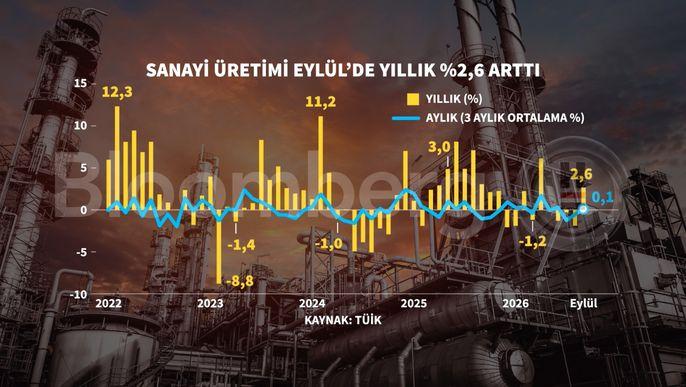
Turkey’s industrial production rebounds in September

TÜİK reported that industrial output rose 2.1% from August and 2.6% from a year earlier in September. Manufacturing increased 2.3% month on month, providing most of the rebound. The release offers a stronger reading on factory activity after four monthly declines. It is a backward-looking September measure, with November’s inflation and financing conditions still important for the outlook.

Industrial production chart accompanying Bloomberg HT’s September 2026 report
Industrial production data in Bloomberg HT’s November 10 report. · Bloomberg HT, reporting TÜİK data