An AI-led stock rout reverses the U.S. election rally. Turkey’s parliament approves a regional defence pact, Paraguay heads toward a presidential impeachment showdown, and Britain raises rates as energy-driven inflation risks grow.
New York Stock Exchange, January 26, 2026 (file photo) · Richard Drew / AP
Global markets
AI sell-off wipes out Wall Street’s post-election rally
At the November 5 U.S. close, the S&P 500 fell 4.4%, the Nasdaq 5.5% and the Dow 3.4%, erasing Wednesday’s gains. Chip and AI-infrastructure shares led the retreat. Reuters linked the selling to fears of tighter data-centre scrutiny and investors unwinding crowded AI positions. Europe’s STOXX 600 closed 0.38% lower, with technology down 3.2%. The reversal highlights uncertainty over the costs, approvals and returns underpinning the AI investment boom.
Paraguay’s president faces Senate trial after lawmakers reject resignation
Santiago Peña offered to resign on November 5 amid the Ueno Bank collapse, but Congress did not accept his departure and the lower house voted to impeach him. The Senate is proceeding with a trial; Peña or his lawyers are due to present a defence Friday morning. Millions of bank customers have struggled to access their accounts. The case has become a test of financial oversight and presidential accountability, with criminal investigations continuing alongside the political process.
Joshua Wong receives a new 10-year national-security sentence
A Hong Kong court sentenced activist Joshua Wong to 10 years on November 5 after his guilty plea to conspiring to collude with foreign forces. His remaining previous sentence runs concurrently. Critics see the case as further narrowing civic activism; authorities defend the national-security law as necessary for stability.
Bank of England raises rates to 4% as its inflation outlook worsens
The Bank of England raised Bank Rate by 0.25 percentage points on November 5. Eight policymakers supported 4%; the ninth wanted 4.25%. September inflation was 3.5%, and the bank now forecasts around 5% by mid-2027 as energy costs feed through the economy. It warned that policy depends on how persistent the shock becomes. The decision raises borrowing costs and shows why a brief fall in oil prices does not immediately remove wider inflation pressure.
OpenAI promises clearer costs and public reporting for future data centres
OpenAI’s November 5 community compact pledges to cover electricity and grid-infrastructure costs, publish water and energy use, and report on local hiring at future campuses it owns and operates. It also proposes wider rules on transparency, community input and financial safeguards. These are company commitments and policy proposals; their scope does not automatically extend to every partner-run facility. For communities, the central issues are utility bills, resource use and accountability.
German factory orders rebound, but the quarter is nearly flat
Provisional data released November 5 show manufacturing orders rose 4.4% in September after August’s revised 10.1% fall. Orders excluding large contracts rose 5.1%, with automotive demand a major contributor. Across the third quarter, however, total orders were only 0.2% above the previous quarter. The rebound offers relief for industrial suppliers, while the quarterly comparison suggests a recovery that remains uneven and sensitive to individual orders.
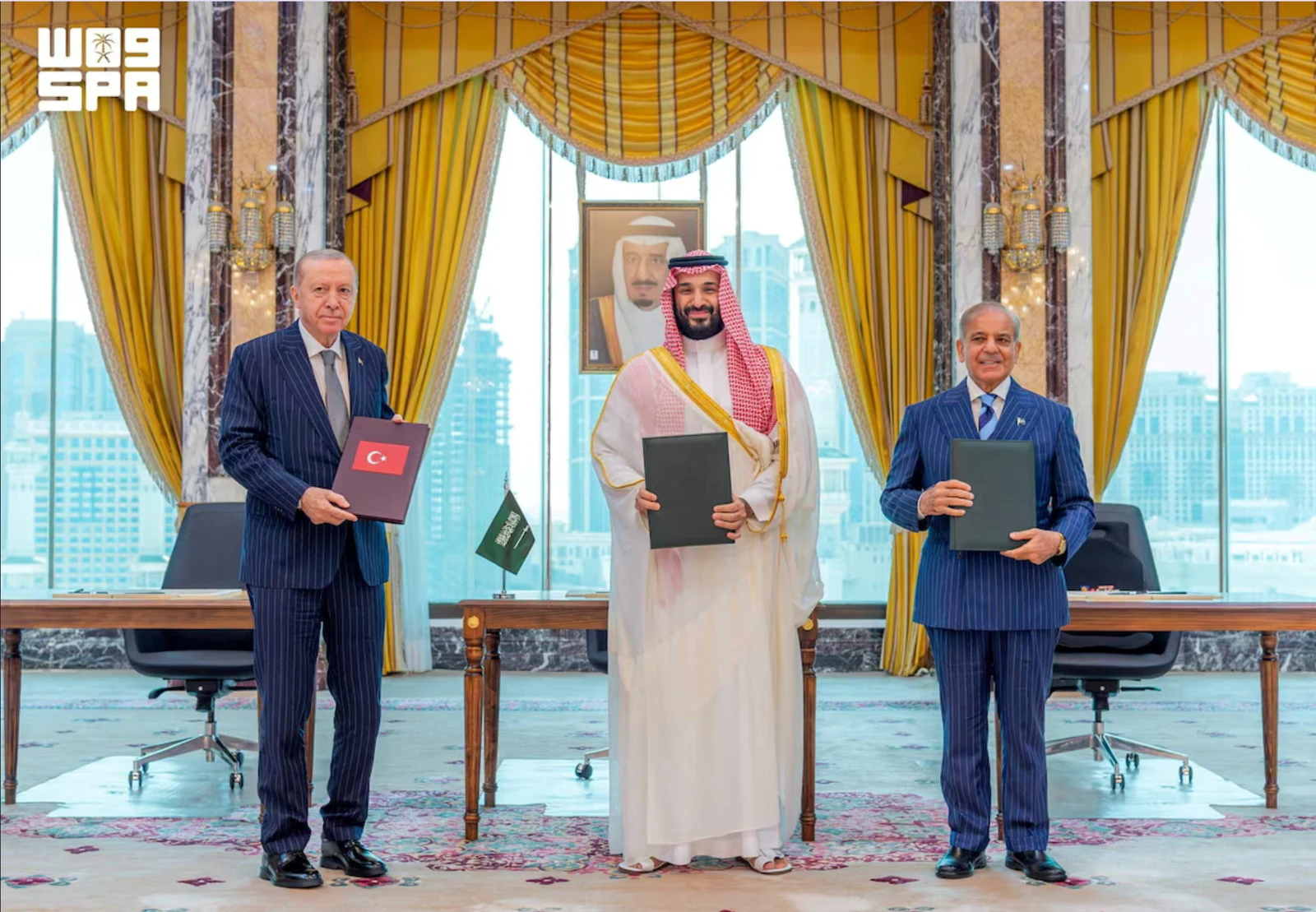
Turkey’s parliament approves the Saudi–Pakistan defence pact
Parliament approved the Mecca joint-defence agreement by 279 votes to 119 in its overnight sitting. The pact links Turkey, Saudi Arabia and Pakistan and treats an external armed attack on one as an attack on all. It moves Ankara closer to providing military support to Riyadh amid Houthi attacks. Implementation remains subject to consultations, national constitutional procedures and the formal ratification steps; the parliamentary vote does not establish that troops have been deployed.
Former minister Fatma Betül Sayan Kaya remanded in the fund investigation
An Istanbul court ordered Kaya held in custody overnight on allegations involving organised-crime membership and capital-markets offences. Her husband İlyas Kaya and former capital-markets regulator chief İbrahim Ömer Gönül were released under judicial controls. Kaya denies receiving inside information or wrongdoing. This is pretrial detention, with the allegations still subject to judicial determination. The case puts political accountability and oversight of investment-fund trading in focus.
S&P Dow Jones Indices will add no Turkish shares in its December review and is suspending quarterly or non-mandatory changes to share counts and investable weights. It cited market-structure and ownership-transparency concerns. The measures govern index composition, while Turkey’s market classification remains under review. They matter because benchmark eligibility and weights influence how international index-tracking funds allocate money to Turkish companies.